Coffee roast weight loss and how to plan around it
Coffee roast weight loss runs roughly 12 to 20 percent. How to measure it per batch and use it to plan green coffee purchases and real plant output.
Short answer: Coffee roast weight loss is usually about 12 to 20 percent of the green weight. Light roasts sit near the low end, dark roasts near the high end, and green moisture moves it further. Measure it on every batch by weighing green in and cooled roasted coffee out, then use the real figure for purchasing and output planning.
Charge 60 kg (132 lb) of green coffee and roughly 48 to 53 kg comes back. That gap is the main correction between a roaster's nameplate and what the packing line actually receives. Plants that plan on the nameplate figure end up short of green coffee, short of finished goods, or both.
Where the weight goes
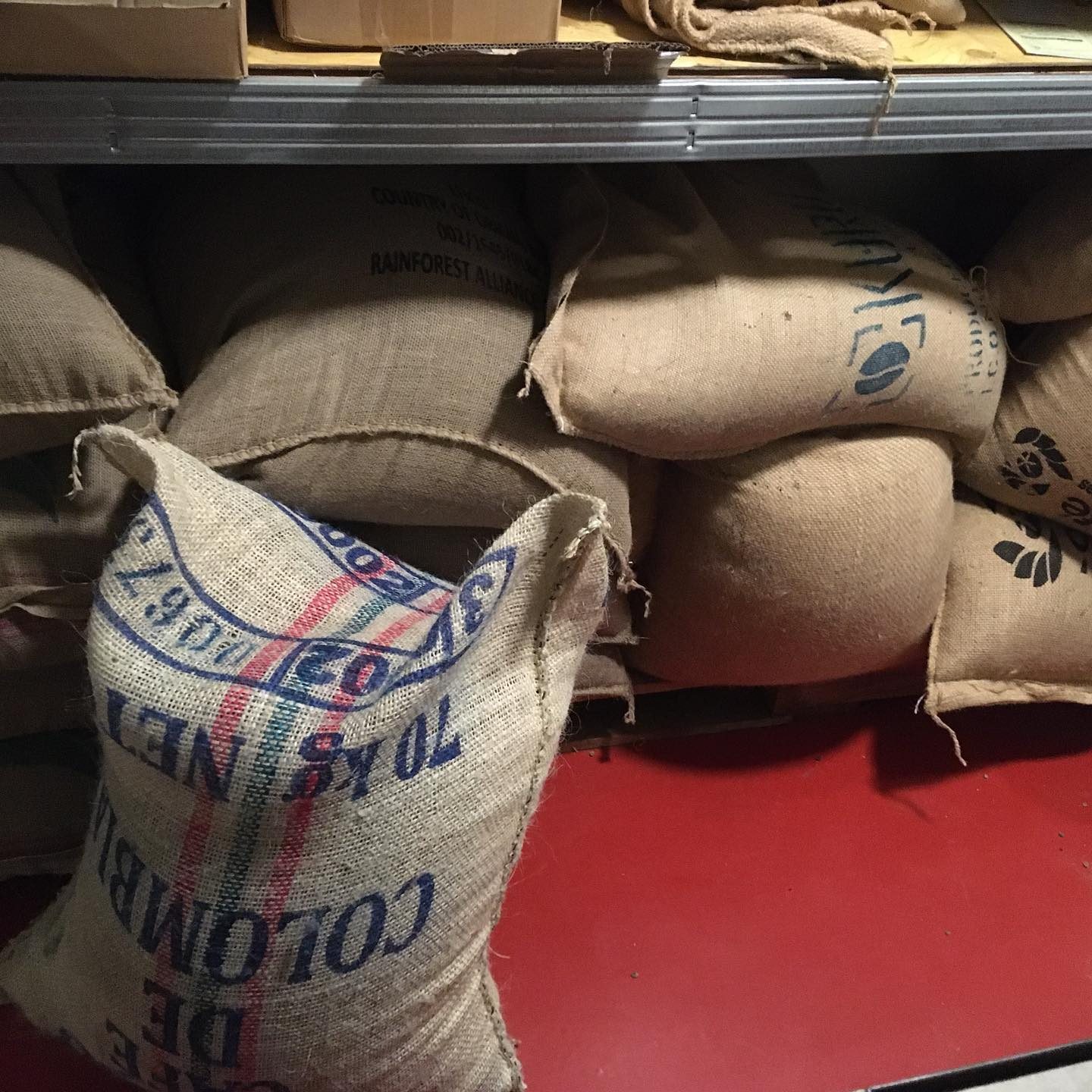
Green coffee usually contains around 10 to 12 percent water. Most of it leaves during drying and browning, and roasted coffee leaves the cooler with only a few percent moisture. That accounts for most of the loss on a light roast.
The rest is dry matter. As the roast develops, sugars and other compounds break down into carbon dioxide, water formed by the reactions themselves, and volatile compounds that leave with the exhaust. Chaff comes off too and ends up in the cyclone. The further the roast goes, the more dry matter is lost, which is why a dark roast loses noticeably more than a light one on the same green.
So roast loss depends on two things the plant can track: the green moisture of the lot and the roast degree of the product.
How to measure it per batch
The method is simple. The discipline is doing it the same way every time.
- Weigh the green charge on a calibrated scale, or read it from the weighing system on the loader. Record the batch number and green lot.
- Let the batch finish cooling. Beans keep releasing moisture while hot, so weighing straight from the drum gives a loss figure that is too low.
- Weigh the roasted coffee at a fixed point in the line, for example after the destoner and before the degassing bin. Pick one point and keep it.
- Calculate loss as green weight minus roasted weight, divided by green weight, times 100.
- Write the result into the roast log next to the color reading and the profile name.
Check the scales on a schedule with reference weights. On a 120 kg (265 lb) batch, a scale that reads 1 kg high moves the loss figure by almost one percentage point, and nobody notices until the monthly stock count does not balance.
What the percentages mean on real batches
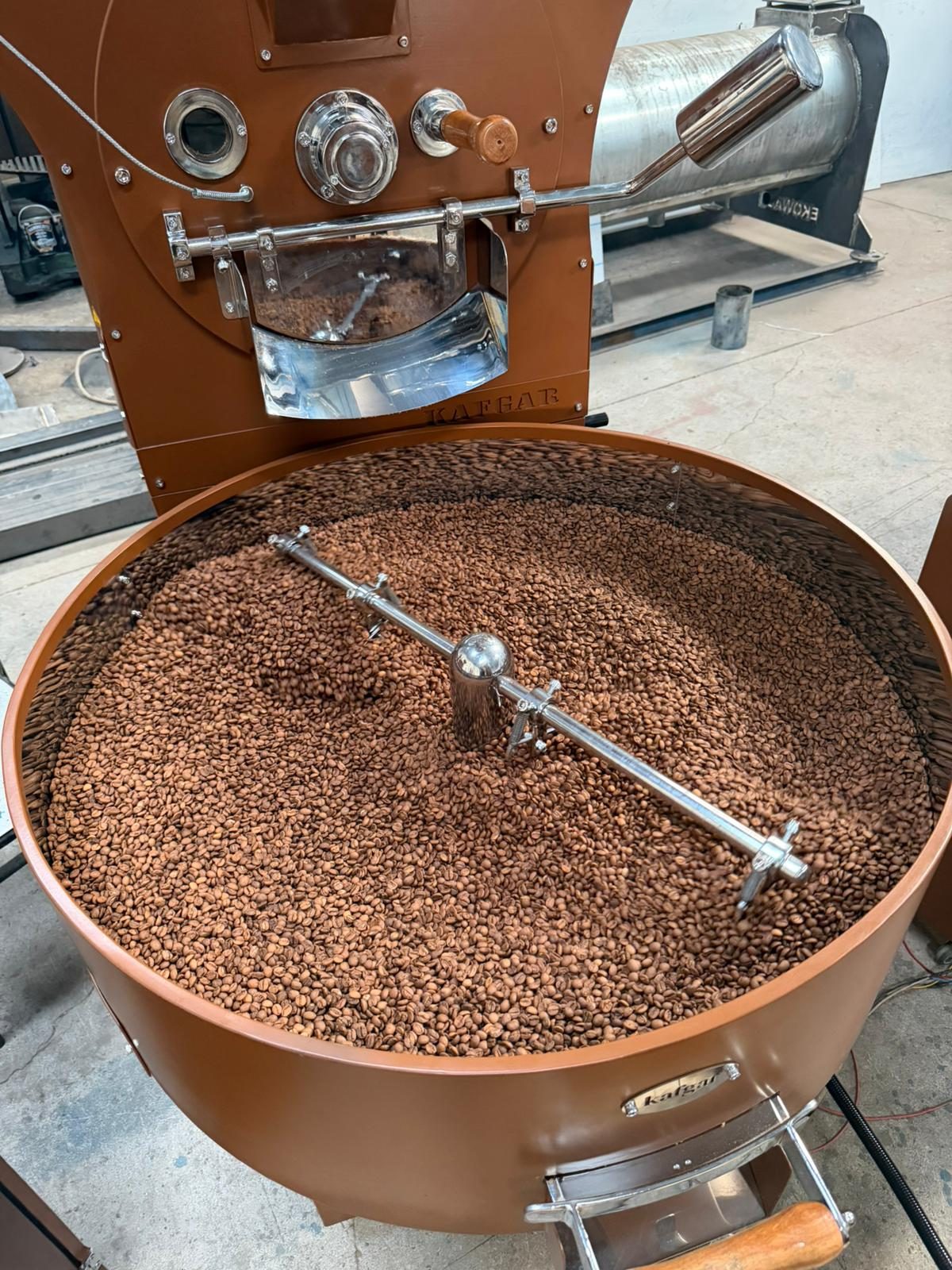
The table converts typical loss figures into roasted output for three Kafgar industrial roasters, using each machine's batch size and maximum hourly green capacity.
| Roaster | Green per batch (kg) | Green per hour (kg) | Roasted per hour at 12 % loss (kg) | Roasted per hour at 16 % loss (kg) | Roasted per hour at 20 % loss (kg) |
|---|---|---|---|---|---|
| KR-60 | 60 | 180 | 158 | 151 | 144 |
| KR-120 | 120 | 360 | 317 | 302 | 288 |
| KR-240 | 240 | 720 | 634 | 605 | 576 |
Between a light filter roast and a dark espresso, a KR-120 can produce about 29 kg per hour less roasted coffee from the same green input. Across two 8-hour shifts at full capacity, that is roughly 460 kg. Size the grinder, the degassing bins and the packing line on the roasted figure for the darkest product, and size the green intake and storage on the green figure.
Using roast loss to buy green coffee
A frequent purchasing error is to multiply instead of divide. Say a plant must deliver 10,000 kg of roasted coffee next month and its average loss is 16 percent.
- Wrong: 10,000 kg times 1.16 equals 11,600 kg of green.
- Right: 10,000 kg divided by 0.84 equals about 11,905 kg of green.
The wrong method leaves the plant roughly 300 kg short, about five batches on a KR-60. The gap grows with darker products and larger volumes.
Use loss figures per product, not one plant average. If 60 percent of the volume is a medium blend at 15 percent loss and 40 percent is a dark espresso at 19 percent, calculate each separately and add them. A single average hides the shift that happens when the product mix changes. The green coffee silos and storage planning post covers how much green to hold once the monthly figure is known.
Loss also belongs in the cost of every bag. The roasted coffee costing post shows how to carry it through a cost calculation.
Reading changes in roast loss
Once loss is logged per batch, it becomes a quality signal. On the same coffee and the same profile, loss should be steady within a narrow band. When it moves, something changed.
A higher loss on the same profile usually means a roast that went darker, or a green lot that arrived wetter than the last one. A lower loss can mean a lighter roast, a lot that dried out in storage, or water added in the cooling stage. Green coffee kept in a dry, warm warehouse slowly loses moisture over months, so the same lot can show a lower roast loss in its last weeks than in its first.
Pair the loss figure with color readings. If color is on target but loss has moved, look at the green moisture. If both have moved, look at the roast. The guide to coffee roast levels explains how development changes the bean.
Frequently asked questions
Is roast loss the same as moisture loss?
No. Water is the largest part, but dry matter is also lost as carbon dioxide, volatile compounds and chaff. That share grows as the roast goes darker.
Should chaff be counted in roast loss?
In most plants, yes, because it is green weight that does not reach the pack. What matters is that the plant weighs at the same point in the line every time, so figures from different days compare fairly.
How often should a plant measure green coffee moisture?
At least for every incoming lot, and again for lots stored for a long time. A moisture reading at intake lets the plant predict roast loss before the first batch.
Can a plant reduce roast loss?
Only within narrow limits, unless the product changes. Loss follows roast degree and green moisture, so a darker roast will always lose more. The realistic aim is a predictable loss, not a lower one.
Planning output with Kafgar
When Kafgar plans a roasting plant, roast loss goes into the capacity calculation before the first layout is drawn. The industrial roaster range runs from the KR-20 to the KR-500, and we can work through your green and roasted volumes with you.
Request a quote on WhatsApp or by email at [email protected].