Coffee degassing time and the rest between roaster and packer
Coffee degassing time in production: how long whole bean and ground coffee rest, how to size degassing silos and when each pack format can be filled.
Short answer: Coffee degassing time depends on the pack. Whole beans going into valve bags can usually be packed within hours of cooling. Packs without a valve, vacuum bricks and capsules need a longer rest, because the coffee keeps releasing CO2. Ground coffee releases gas much faster than whole beans, so its rest is planned separately.
A pallet of freshly packed coffee looks fine at the end of the shift. By the next morning, some packs have puffed up, a few seals have opened and the cartons no longer stack square. The roast was good. The coffee simply went into the pack before it had finished giving off gas, and the line had no place to let it rest.
That rest is a planning question as much as a coffee question. It decides how much roasted coffee storage a plant needs, how the grinder and packer are scheduled, and which pack formats can run straight off the roaster.
Where the gas comes from
Roasting produces carbon dioxide inside the bean as sugars and amino acids break down. Much of that CO2 stays trapped in the bean's cell structure when the batch drops into the cooling tray. It leaves quickly in the first hours and days, then at a falling rate over the following weeks.
Three things change the rate in production:
- Roast degree. Darker roasts form more CO2 and have a more open, brittle structure, so they release gas faster at first. Light roasts degas more slowly.
- Temperature. Warm coffee releases gas faster than cool coffee. Beans that leave the cooler properly cooled behave more predictably in the silo.
- Particle size. Grinding breaks open the cells. Ground coffee loses a large share of its CO2 within minutes to hours, which whole beans would take days to release.
The last point is the one that trips plants up. A schedule built around whole bean timing does not work for ground coffee, and the reverse is also true.

Why rest at all
Packing too early causes swollen and burst packs in any format that cannot vent. Even with a one-way valve, a pack filled with very fresh coffee pushes out gas, and some aroma with it, through the valve for days. That is usually acceptable for whole beans in valve bags, and many specialty roasters pack the same day for exactly that reason.
Resting too long has its own cost. While coffee sits in an open bin or a vented silo, it is exposed to air, and oxygen starts to work on the oils and aroma compounds. The aim is a controlled window: long enough that the pack holds its shape, short enough that the coffee is still fresh when it is sealed. For how the valve itself works, see why coffee bags need a degassing valve.
Packing windows by format
The table below shows how common formats relate to degassing. It gives the logic, not fixed hours, because the right window depends on the coffee, roast degree, temperature and the packaging material. Each plant should confirm its own window with trial packs.
| Pack format | One-way valve | How it relates to degassing |
|---|---|---|
| Whole bean, retail valve bag | Yes | Can be packed within hours of cooling, the valve vents the gas |
| Whole bean, bulk wholesale bag | Usually yes | Same as retail, check that the valve suits the bag volume |
| Whole bean, pack or tin without valve | No | Needs a longer rest so the pack does not swell |
| Ground coffee, valve bag | Yes | Short rest after grinding to avoid the first burst of gas |
| Ground coffee, vacuum brick | No | Needs well degassed coffee, or the brick softens and loses vacuum |
| Capsules and pods | Rarely | Ground coffee is rested before filling so the lids stay flat |
Test it during commissioning. Pack a few units at different rest times, store them at warehouse temperature and check them daily for swelling, seal stress and aroma. Write the result into the production instructions for each product.
Sizing the degassing buffer
Once the rest time is known, the storage volume follows from it. Multiply the roasted output per hour by the hours of rest, then add a margin for shift changes and packer downtime.
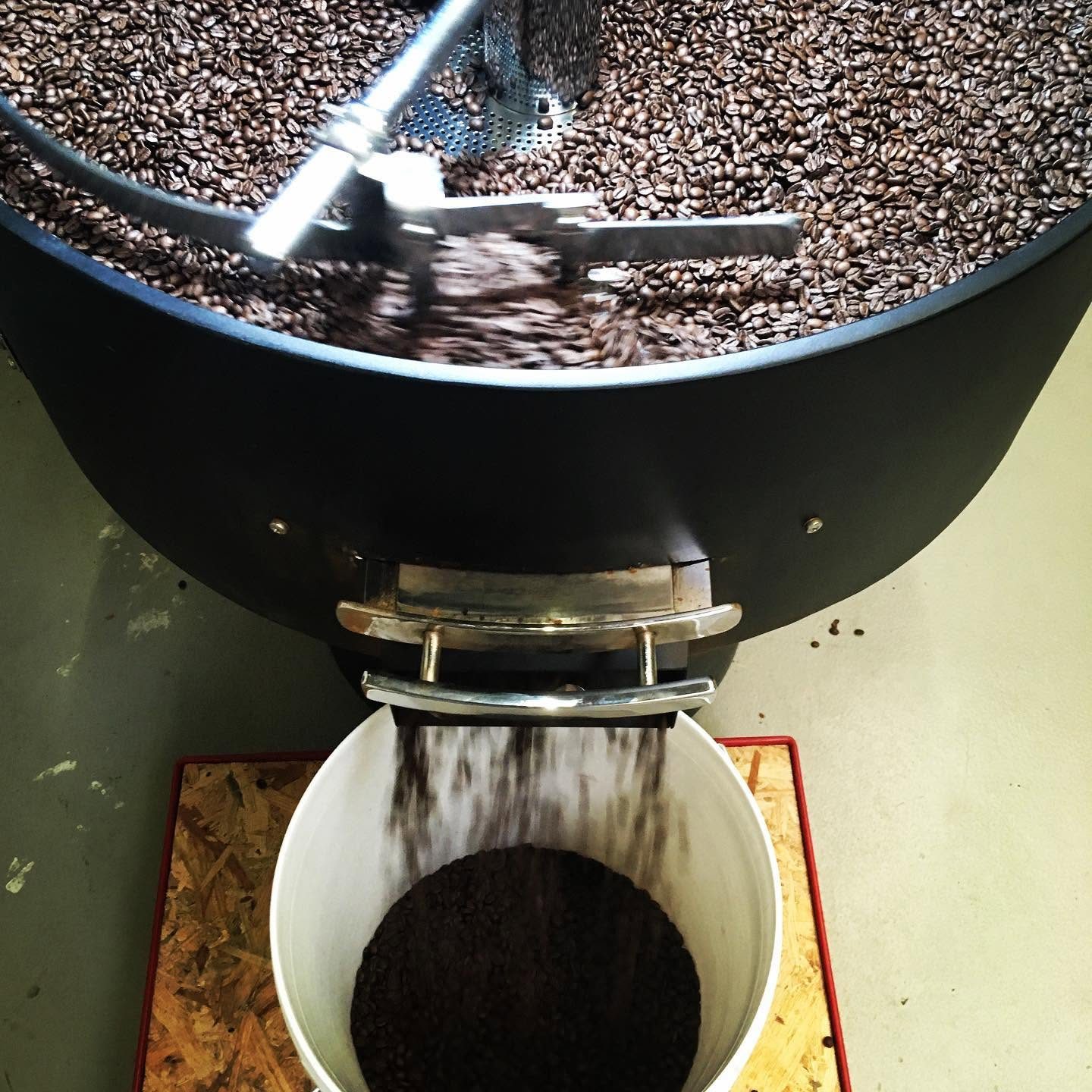
Take a Kafgar KR-30, which roasts 30 kg (66 lb) of green coffee per batch and up to 90 kg per hour. With roast loss of roughly 12 to 20 percent, that is about 72 to 79 kg of roasted coffee per hour at full capacity. A product that needs eight hours of rest before packing therefore needs storage for roughly 580 to 630 kg of roasted coffee before any margin, and each product that rests needs its own silo. On a larger roaster the figure scales in proportion.
That is why many plants roast whole bean products for valve bags straight to the packer, and reserve silo capacity for products and formats that really need the rest.
Silos and bins that work for resting coffee
Roasted coffee silos for degassing are a different design problem from green coffee storage:
- First in, first out. A cone that empties from the center lets fresh coffee run through while older coffee sits at the walls. A steep cone with smooth walls helps the whole column move down together, so each batch rests for about the same time.
- Venting. The CO2 has to leave the silo. A closed silo without a vent builds pressure and keeps the coffee sitting in its own gas, which affects the timing you planned.
- Labels and records. Each silo or bin should show the product and the time it was filled. Without that, the rest time is a guess.
- One product per silo. Mixing blends in one silo to save space makes traceability and rest times unreliable.
For post-roast blends, the blend is often mixed before the coffee goes into the degassing silo, so the components rest together and the packer receives a uniform product.
Kafgar supplies roasted coffee silos as part of plant projects and manufactures the conveyors, elevators and mixers that connect them to the roaster and the packing line. The coffee roasting plants page shows where the silo sits in a typical line.
A safety point that is easy to miss
CO2 is heavier than air and has no smell of its own. It collects at the bottom of large silos, in pits and in poorly ventilated rooms where roasted coffee rests in volume. Staff should never climb into a roasted coffee silo or bin to clear a blockage without ventilation, gas measurement and the confined space procedure your local safety rules require. The degassing room itself needs ventilation planned at the design stage, not added after the first incident.
Ground coffee needs its own plan
Ground coffee releases gas quickly and also loses aroma quickly, so long buffers of ground coffee are a poor idea. Most plants grind close to the packer, with a small hopper between them, and let any required rest happen in covered, vented bins sized for a short hold. For vacuum bricks, the coffee may need a longer controlled rest, and that rest belongs in the schedule from the start.
The post on fresh roast and fresh grind explains how the roast clock and the grind clock interact.
Frequently asked questions
Does degassing change the roast loss figure?
Only slightly. The CO2 that leaves the beans after roasting is a small fraction of the batch weight compared with the water and dry matter lost in the drum. For production planning, the roast loss measured at the scale after cooling is the figure to use.
Can nitrogen flushing replace the degassing rest?
No. Nitrogen flushing removes oxygen from the pack at sealing, but it does not stop the coffee from releasing CO2 afterward. A pack without a valve can still swell if the coffee was too fresh. The two methods solve different problems and are often used together.
Should light and dark roasts rest for the same time?
Not necessarily. Dark roasts release gas faster in the first hours, while light roasts release it more slowly over a longer period. Run trial packs for each roast degree and record a separate window for each product.
Is a degassing silo needed for a small roastery?
Usually not. A roastery packing whole beans into valve bags can pack from the cooling tray or from simple closed bins. Silos become useful when volume grows, when products need a longer rest, or when roasting and packing run on different schedules.
Planning the rest into your line
For plant projects, Kafgar sizes the roaster, the conveying equipment and the roasted coffee buffer together for plant projects, and supplies bean packagers that fit the chosen format. A list of your products and pack formats is enough for a first layout proposal.
Request a quote on WhatsApp or by email at [email protected].