Coffee Roaster Installation Requirements Before Delivery Day
Coffee roaster installation requirements before delivery: access and rigging, floor load, 380 V three-phase power, gas line, exhaust route and unloading.
Short answer: Before an industrial roaster arrives, the site needs a delivery route and lifting plan, a level floor checked for the machine's weight, a three-phase supply (380 V as standard), a gas line built and tested by a licensed installer, a planned exhaust route and fresh air. Kafgar KR-120 and larger roasters arrive loaded straight into the container.
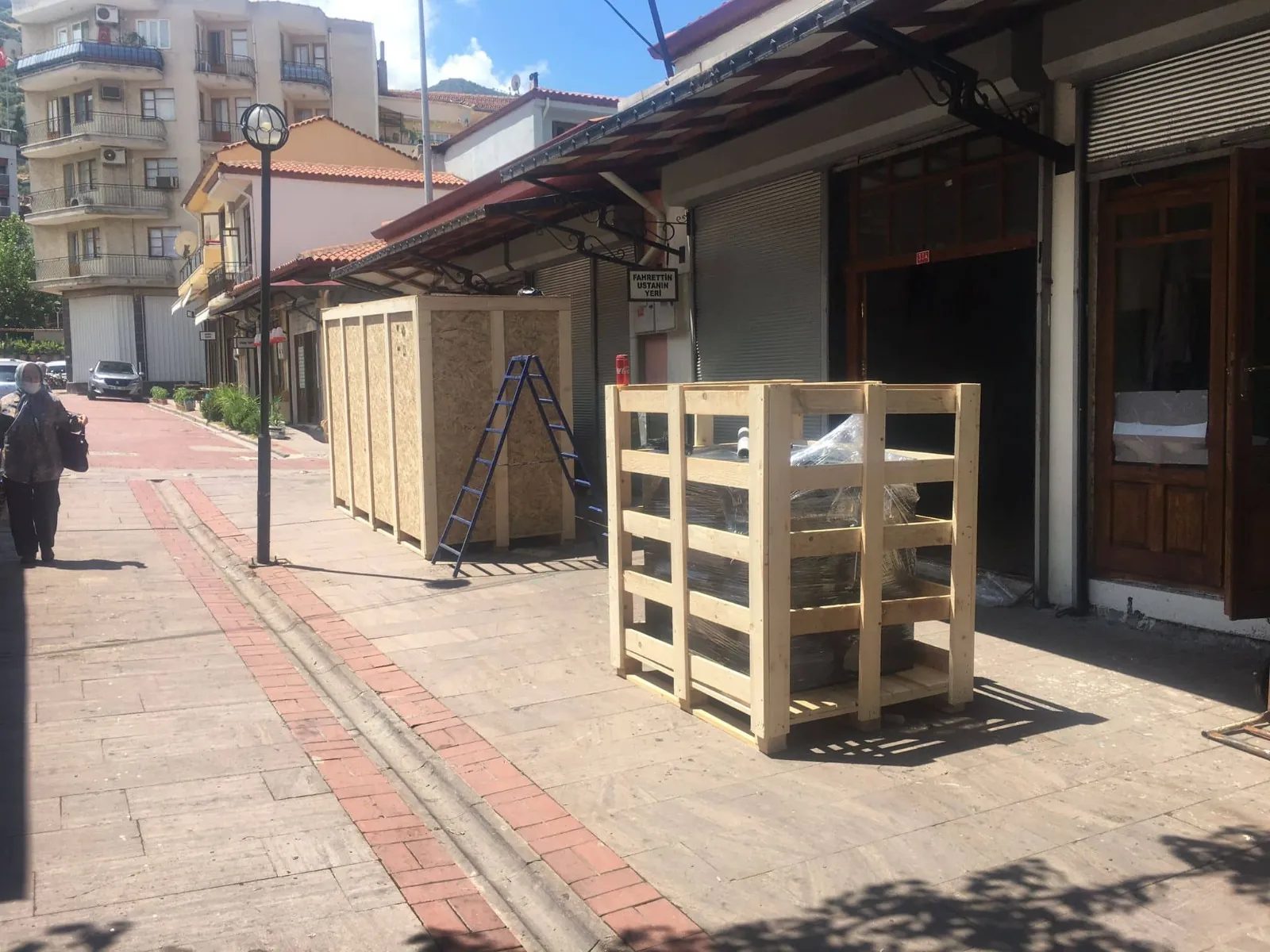
A Kafgar KR-60 weighs 1800 kg and travels in a custom wooden export crate. A KR-120 weighs 3200 kg and is loaded directly into the shipping container, with no crate around it. Those two facts already tell you most of what has to be ready at the site: equipment that can lift the load, a route wide enough to move it, and a floor that can carry it.
When an installation runs late, the cause is usually in the building: a door opening narrower than the drawing, a slab nobody checked, a gas line still waiting for its inspection. The checklist below follows the order in which those problems tend to appear, from the truck at the gate to the first test batch.
Start from the machine data
Ask for the general arrangement drawing of your roaster and of every item that comes with it, such as the cyclone, the loader, the destoner and the afterburner. The drawing shows connection points for gas, power and exhaust. The table gives the assembled machine. For rigging, ask for the size and weight of each piece as it ships, because the lifting plan is built around the heaviest single piece and not around the finished line.
| Model | Batch | Weight (kg) | Dimensions (cm) | Power requirement (kW) | Heat power (kW) |
|---|---|---|---|---|---|
| KR-20 | 20 kg (44 lb) | 450 | 140x270x180 | 0.55 | 58 |
| KR-30 | 30 kg (66 lb) | 950 | 200x250x220 | 5.5 | 62.5 |
| KR-60 | 60 kg (132 lb) | 1800 | 280x350x280 | 11 | 93 |
| KR-120 | 120 kg (265 lb) | 3200 | 350x420x320 | 18.5 | 140 |
| KR-240 | 240 kg (529 lb) | 5000 | 350x420x320 | 12 | 140 |
| KR-500 | 500 kg (1,102 lb) | 12000 | 850x420x480 | 45 to 55 | 290 to 600 |
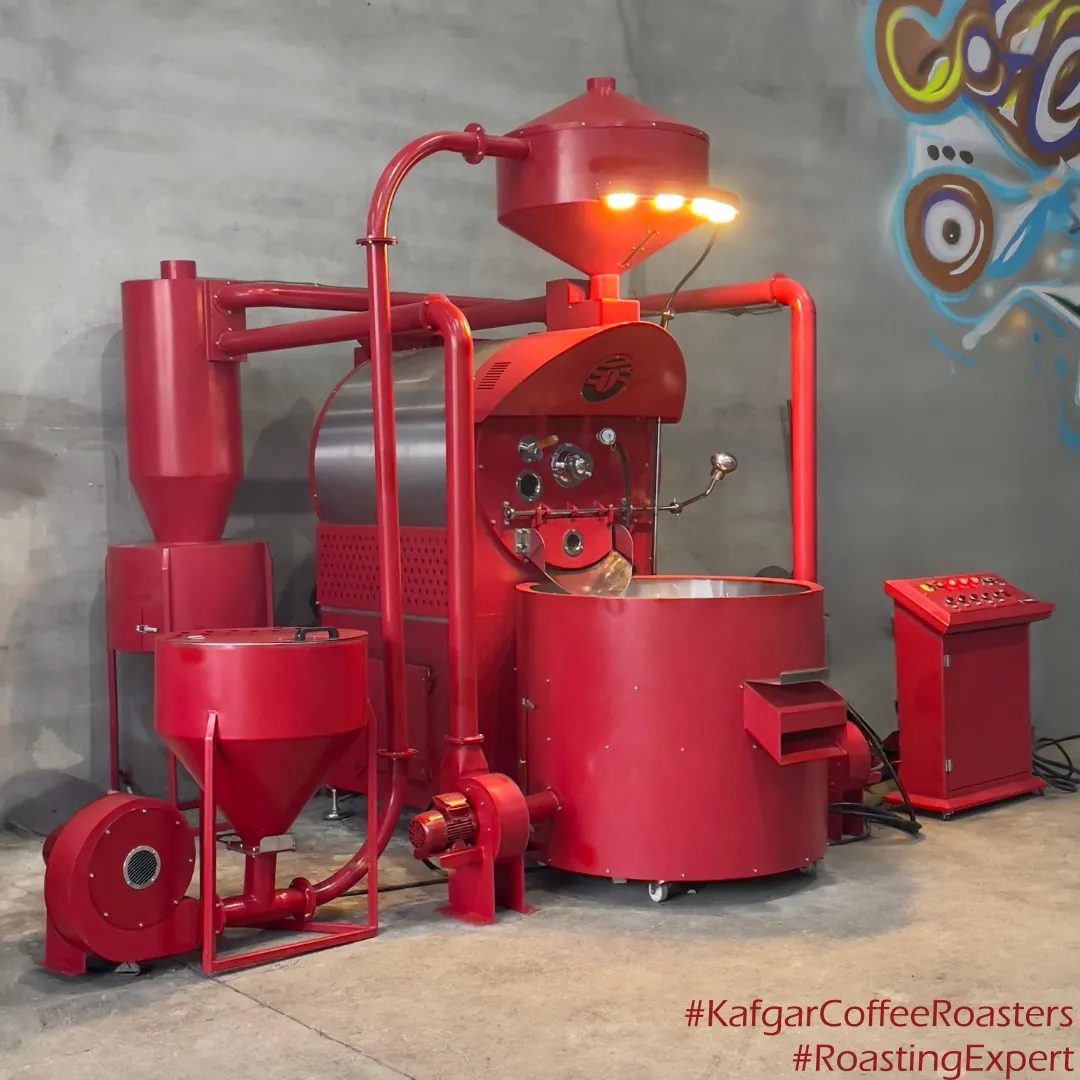
Access, unloading and rigging
Walk the route from the street to the final position with a tape measure. Measure clear openings, not nominal door sizes, and include frames, columns, ramps, turns in corridors and anything overhead: cable trays, sprinkler pipes, lights. A crated machine is larger than the machine, so add the crate to your sums.
For crated machines, a forklift with enough capacity and long enough forks is usually all that is needed, provided the ground between truck and door is firm and level. Machines that arrive inside a container are a different job. The container has to be parked where it can be opened fully, and the load is pulled out with a forklift of the right rating, skates and a winch, or lifted by crane once it is clear of the container. Book a rigging company that moves machine tools, and agree in writing who brings the lifting equipment and the crew on unloading day.
If the room will not be ready when the shipment lands, plan dry, covered storage. Export crates protect a machine in transit. They are not made to stand outdoors for weeks.
Floor and foundation
A roaster puts its whole weight on a few feet. For the KR-120, KR-240 and KR-500, and for any machine on an upper floor or a mezzanine, ask a structural engineer to confirm the slab can carry the point loads. On the KR-500, foundation, gas supply, exhaust and material handling are planned together with the plant layout from the start.
The floor under the roaster should be level, so the drum, the cooling tray and the discharge chute sit as designed. Leave working space on every side that needs service: the burner, the motors, the chaff collector, the cooling tray and the control cabinet. The layout drawing should show these zones before anyone pours concrete or builds a partition wall.
Electrical supply
Kafgar industrial roasters run on 380 V, 50 to 60 Hz three-phase as standard, with 110 or 220 V on request for the KR-20 to KR-240. The KR-500 is built for 380, 400 or 480 V three-phase. Confirm your local voltage and frequency at the order stage, not on installation day.
The power requirement in the table is for the roaster alone. Your electrician sizes the supply for the whole line: loaders, elevators, destoner, afterburner fan, grinders, packing machines and lighting, plus whatever you plan to add next. Ask for a lockable isolator within reach of the machine and a proper earth connection.
Gas line
Every Kafgar roaster from 15 kg (33 lb) up is gas fired, on LPG, LNG or natural gas. The line is sized for the roaster's heat power plus the afterburner and any other gas appliance that can fire at the same time. A licensed installer builds it, pressure tests it and gets it approved by the local gas authority. Tell Kafgar your gas type when you order, because the burner is set up for it. Put a manual isolation valve where an operator can reach it quickly.
Exhaust route and fresh air
Decide where the exhaust leaves the building before the roaster's position is fixed. Wall and roof penetrations, cyclone and afterburner positions and the stack location often need a building permit, and in many places an air permit as well. Keep the route short, with few bends, as the article on airflow in coffee roasting explains in more detail.
A roaster and its cooling fan pull a large volume of air out of the room, and the burner needs combustion air. If no fresh air can come in, the room runs under negative pressure, doors become hard to open and the fans no longer move the air they were set up for. Plan dedicated fresh air openings.
The smaller items that stop a start-up
- Compressed air, only if an item in your line needs it. The equipment list will say so.
- Good light at the sight glass, the control panel and the cooling tray, plus emergency lighting.
- Fire extinguishers of the type your fire safety adviser specifies, and a clear exit route.
- A desk, power and a network point near the panel if you will log roasts in Artisan or Cropster.
- Green coffee, a scale and clean bins on site for the first roasts.
Frequently asked questions
Who does what on installation day?
Kafgar supports installation and the first roasts, and on roasting plant projects its own team assembles the line on site. Building work, utility connections and local approvals normally stay with the buyer. The split is written into the quote, so check it before you book contractors.
Can an industrial roaster go on an upper floor?
Only after a structural engineer has confirmed the floor for the point loads and a lifting route exists, often through an opening for a crane. For the heavier models a ground floor slab is usually the simpler choice.
How much space should be left around the roaster?
Enough to open every service panel, empty the chaff collector, reach the burner and stand comfortably at the cooling tray. The figures depend on the model and the room, so they belong on the layout drawing for your project.
Can the gas line be installed after the roaster arrives?
It can, but the roaster cannot be commissioned until the line is tested and approved. Running both in parallel is fine if the installer has the connection point and the heat power figures early.
Preparing your site with Kafgar
Send us your building drawing, local voltage and gas type, and we can go through the connection points, service zones and unloading needs for your model with you before it ships. You can compare the industrial type coffee roasters or see how a full line is planned on the coffee roasting plants page.
Request a quote on WhatsApp or by email at [email protected].