Pre roast vs post roast blending in a production roastery
Pre roast vs post roast blending at plant scale: how each method affects flavor and consistency, the equipment each needs and when to combine the two.
Short answer: Pre roast blending mixes green coffees and roasts them together in one batch. It is simpler and works well when components are similar in density, moisture and size. Post roast blending roasts each component on its own profile and mixes them afterward. It gives more control over flavor, but needs more batches, roasted coffee storage and a mixer.
Take a house espresso built from a dense, high-grown washed coffee and a softer Brazilian natural. Roast them together and the softer beans race ahead. By the time the dense beans are developed, the Brazil is darker than anyone intended. Roast them apart and each one lands where it should, but now the plant runs two batches, needs two places to store roasted coffee, and has to mix them accurately before packing.
The choice is a trade between control and simplicity, and the components, the volume and the line decide which side wins.
Why components behave differently in the drum
Green coffees in a blend often differ in four ways that matter to the roast. Density changes how fast heat moves into the bean. Moisture changes how much energy goes into drying before browning starts. Bean size changes surface area, so small beans heat faster than large ones. Processing matters too: natural and honey coffees often carry more sugars near the surface and can scorch or darken sooner than washed coffees.
When those properties are close, the components roast at nearly the same rate and finish together. When they are far apart, a single profile can only suit one of them. The usual result is a blend that tastes uneven, with some beans roasty and others grassy. For roast defects of this kind, troubleshooting uneven roasts covers the signs to look for in the cooling tray.
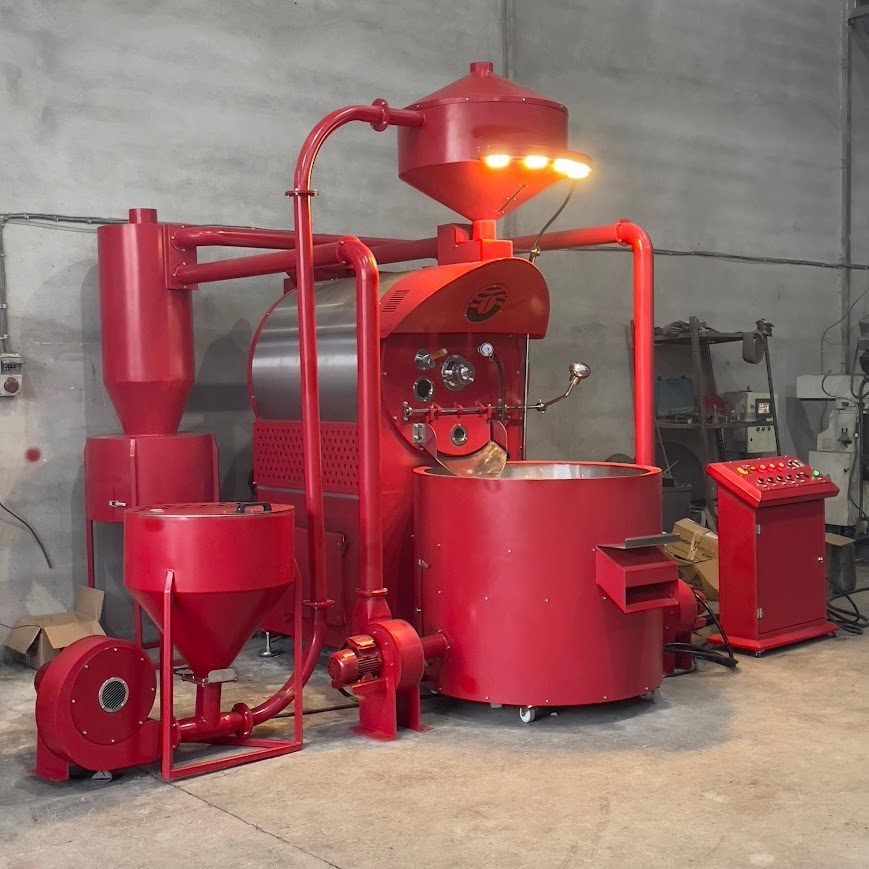
The two methods side by side
| Pre roast blending | Post roast blending | |
|---|---|---|
| Batches per blend | One | One per component |
| Profile control | One profile for all components | A separate profile for each component |
| Suits | Components with similar density and size | Components that roast at different rates |
| Color in the bag | Can look uneven, which some brands accept | Even per component, mixed after |
| Weight loss | Measured once for the blend | Measured per component, recipe set on roasted weight |
| Equipment beyond the roaster | Green weighing, green mixing or sequential loading | Roasted coffee storage per component, weighing, mixer |
| Scheduling | Simple | More batches to plan and track |
| Risk | One component over or under developed | Mixing error or wrong ratio after roasting |
Pre roast blending in practice
In a pre roast setup, the recipe is written in green weights. Each component is weighed and loaded into the roaster hopper, either from separate silos through a loader or by hand at small scale. The drum does much of the mixing during the roast.
The method suits blends built from coffees of similar character, for example two washed coffees from neighboring regions, or a commodity blend where cost and throughput come first. It also suits plants with limited floor space, because no roasted storage is needed per component. One batch, one roast log, one weight loss figure.
Its weakness is the profile. If one component needs a gentler start or a longer development, the blend gets a compromise. Some roasters accept a mottled look in the bag as part of the blend's identity. Many wholesale buyers do not.
Post roast blending in practice
Here the recipe is usually written in roasted weights, because each component loses a different share of its weight in the roast. Typical roast loss is roughly 12 to 20 percent, depending on roast degree and the moisture of the green coffee, so a 50:50 green recipe does not give a 50:50 roasted blend unless the losses happen to match.
Each component is roasted on its own profile, cooled, destoned and held in its own bin or silo. When the blend is needed, the components are weighed out and mixed, then sent to grinding or packing. The roaster can push a dense coffee harder and treat a soft natural more gently. Each component can also be sold on its own as a single origin from the same stock.
The cost is complexity. The plant runs more batches, carries more work in progress and needs a mixing step that is as accurate as the roast.
What each method needs at plant scale
At small volumes, both methods can run with a scale and buckets. At production volumes, the equipment decides how well either method works.
For pre roast blending, the key pieces are green coffee silos per component, a way to weigh each component into the batch, and a loader or elevator that delivers the charge to the roaster hopper. Kafgar manufactures the conveyors and screw elevators for this step. Green coffee silos can be supplied as part of the project.
For post roast blending, add roasted coffee storage for each component, a weighing step and a mixer that blends without breaking beans. Kafgar builds the mixer and the handling equipment around it. A Z-type elevator moves roasted beans in buckets at low speed, which keeps breakage down when coffee travels between the cooler, the storage bins and the mixer. Roasted coffee silos and dosing equipment are supplied by Kafgar as part of a plant project.
Layout matters more with post roast blending. Roasted components should flow forward to the mixer and on to grinding or packing without doubling back past the roaster. The principles are in designing a roasting line that flows.
When to combine the two
Many production plants use both methods in the same line. A common pattern is to pre blend components that roast alike, then post blend that group with a component that needs its own profile. An espresso might pre blend two washed Central American coffees, roast a natural Brazil separately, and combine them after roasting.
This keeps the batch count lower than full post roast blending while still protecting the component that behaves differently. It also lets the plant change the blend ratio quickly when one origin runs short, without rewriting every profile.
Whichever method is used, record it. The batch record for a blend should show each green lot, the profile used, the roasted weight and the ratio mixed. When a customer reports a change in flavor, that record shows whether the cause was a new green lot, a profile change or a mixing error.
Frequently asked questions
Does post roast blending always taste better?
No. When the components roast at similar rates, a well designed pre roast blend can taste just as good and costs fewer batches. Post roast blending earns its extra work when the components differ clearly in density, size or processing.
Can a blend change method without customers noticing?
Usually not without testing. Moving a blend from post roast to pre roast changes how each component develops. Roast both versions, cup them side by side and adjust the profile before switching production.
How accurate does post roast weighing need to be?
Accurate enough that the ratio in every pack matches the recipe the blend was approved on. Weigh each component on a calibrated scale or a dosing system, and check the mixed blend against a reference sample.
Is a separate mixer needed if the components go into one silo?
Pouring components into one silo layers them rather than mixing them. The silo then discharges unevenly, so packs at the start and end of the run can differ. A mixer, or at least controlled feeding into the grinder, gives a consistent blend.
Planning blending into your line
The choice of method shapes the layout, the silo count and the batch plan, so it belongs in the first conversation about a new line, not after the roaster is installed. Kafgar plans complete coffee roasting plants with the roasters, conveyors, elevators and mixers built in its own factory and the silos supplied as part of the project. For the product side of the question, see single origin vs blend.
Request a quote on WhatsApp or by email at [email protected].