What It Takes to Start Roasting Coffee at Origin
Roasting coffee at origin: why producers add value at home, domestic market vs roasted export, shelf life, gas and power, spare parts and training.
Short answer: Roasting coffee at origin lets a producer or exporter sell a finished product instead of green beans. The domestic market is usually the first customer, because roasted coffee has a limited shelf life and buyers abroad tend to roast close to their own customers. Gas supply, stable power, spare parts and trained staff decide how well an origin plant runs.
Brazil grows more coffee than any other country, and it is also one of the largest coffee-drinking markets in the world. Most producing countries look different. The coffee leaves as green beans, and the roasting, blending, branding and packing happen thousands of kilometers away, in the country where it is drunk. The producer sells before the step that turns a commodity into a product.
That is changing in a number of origins. Exporters with steady access to good lots, cooperatives with their own brands and coffee companies that run cafés are building roasting plants at home. The case for it is real, but so are the constraints, and most of them have little to do with roasting itself.
Why producers add roasting
The first reason is value. A packed, branded coffee carries more of the final value than the green beans inside it, and roasting at origin keeps that value in the country. The second is the domestic market. Several producing countries have growing middle classes, more cafés and more supermarket shelf space for local brands. Imported roasted brands and instant coffee often fill that demand, and a local roaster with fresh coffee and a genuine origin story can compete with them.
Producers also have an advantage foreign roasters cannot copy. They see every harvest early, they can cup new lots as soon as they are milled, and they can build blends around coffees they know well. Origin roasting also creates skilled jobs in production, quality control and maintenance.
Domestic market or export of roasted coffee
The two routes look similar on paper and behave very differently in practice.
| Factor | Domestic market | Export of roasted coffee |
|---|---|---|
| Time from roaster to customer | Days to a few weeks | Weeks to months, including transit and warehousing |
| Packaging needs | Standard valve bags work | Barrier packs, valves, often nitrogen flushing |
| Customer expectation | Local brand, local roast date | Competes with roasters in the buyer's own market |
| Main risk | Competition from imported and instant brands | Staling before sale, food labeling and import rules |
| Typical start | Cafés, retail, hotels and offices | Branded retail packs for selected markets |
Roasted coffee starts losing aroma within weeks once it is exposed to air, and good packaging slows that down without stopping it. Container transit, customs and the importer's warehouse all eat into the time a bag can sit on a shelf. Buyers in consuming countries also expect a recent roast date, and many prefer to roast close to the customer. For these reasons most origin plants start with the domestic market and add exports later, for branded retail packs, into markets they understand well. The posts on why coffee bags need a degassing valve and how coffee packaging keeps beans fresh explain what the pack has to do.
Gas, power and the realities of the site
In many producing regions there is no natural gas grid near the plant. That leaves LNG or, more often, LPG from cylinders or a bulk tank. Kafgar roasters of 15 kg and larger are gas fired and run on LPG, LNG or natural gas, and the gas type is fixed in the quotation and the order. What matters at origin is the supply chain behind the fuel: a reliable distributor, enough storage on site to ride out a delivery delay, and a licensed installer who can approve the line.
Power is the second question. Industrial roasters need three-phase supply, 380 V as standard. Where the grid suffers voltage dips or outages, plan a generator large enough to keep the drum turning and the cooling running if the grid drops mid-roast. A batch stopped in the drum is lost, and a hot drum full of coffee without airflow is a fire risk. The electrical load is modest compared with the burner: 11 kW for a KR-60 and 18.5 kW for a KR-120.
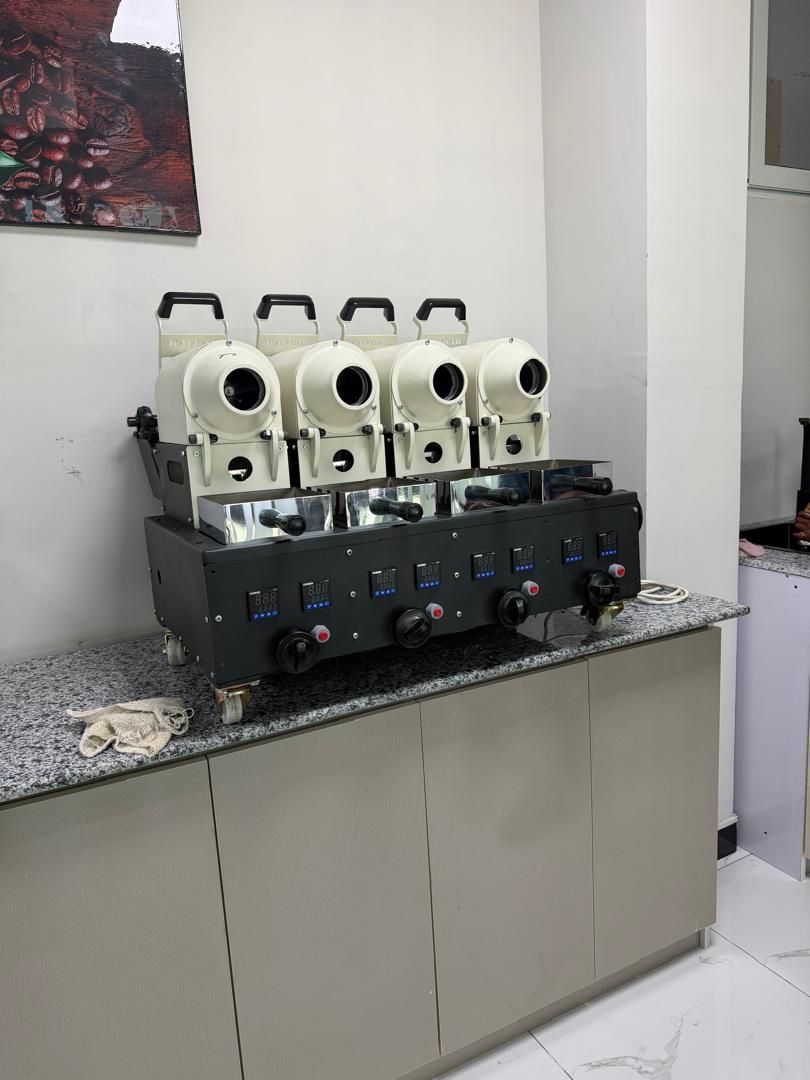
For small roasting at origin, such as a café roastery or a pilot line, the shop range up to the KR-10 can also run on electricity.
The quality lab comes first
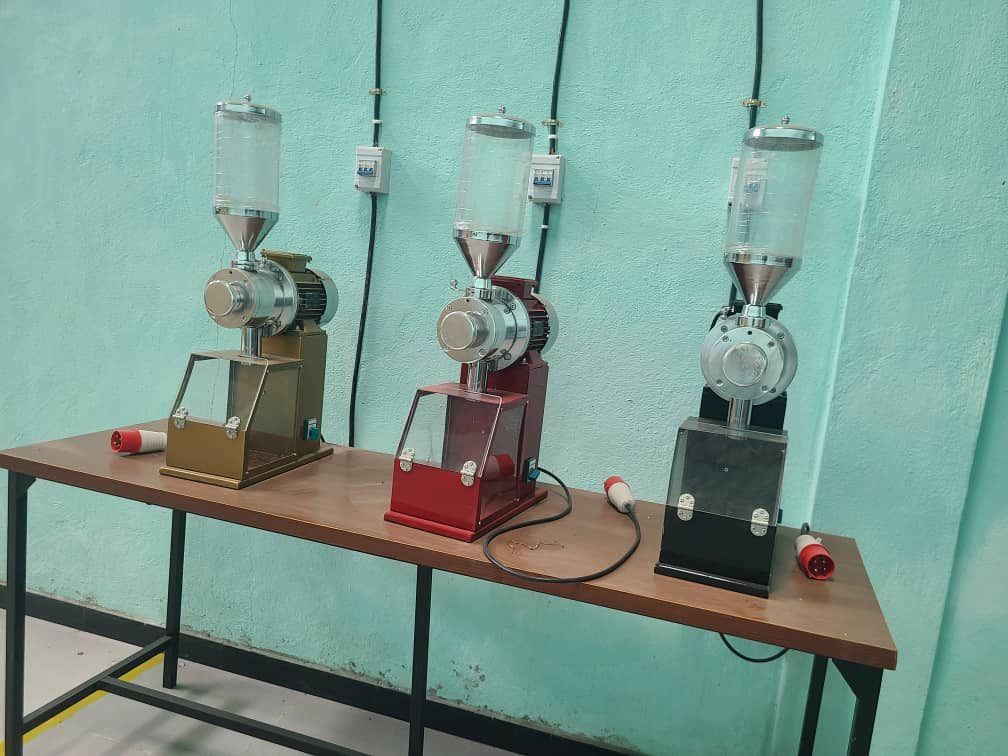
An origin plant has a natural edge in green coffee, and the lab is where that edge is used. Sample roasting and cupping of each lot before it enters production lets the plant build consistent blends from harvests that change every year. The Ethiopia roasting plant is an example: KR-10 and KR-20 roasters, with D10 grinders and sample roasting and cupping equipment supplied alongside them, planned as one project in 2022. Kafgar has shipped roasters, grinders and cupping equipment to Ethiopia regularly since then. A sample roaster is a small item on the equipment list and one of the most useful.
Spare parts and training far from the factory
A plant on another continent from its manufacturer needs to be more self-reliant than one down the road. Keep the common wear parts on site, train at least two people on each machine, and make sure one of them can handle basic electrical and burner faults. Remote help works well when your team can send clear photos, videos and roast logs. Spare parts come from the Kafgar factory, so build customs clearance time into the stock you hold.
Starting size
Origin plants usually begin with a domestic volume they can sell, not with export ambitions. That often means one industrial roaster from the industrial range, a destoner, a grinder sized for the local grind and a packing machine, laid out so a second roaster can follow. The plant grows with the brand.
Frequently asked questions
Can coffee from our own farms go straight into the roaster?
Only after it has been dry milled, graded and checked like any purchased lot. Moisture, defects and foreign matter still decide how it roasts, and a destoner ahead of the roaster is still needed. Own-farm coffee makes intake easier to plan, not optional.
How do we train operators if the manufacturer is far away?
Most training happens on site during installation and the first production roasts, which the Kafgar team carries out on plant projects. After that, 2 years of support are included, with paid support available afterward.
Can we roast both for the domestic market and for export in one plant?
Yes, the roasting equipment is the same. The differences are in packaging, labeling and stock planning, so plan the packing line for the stricter of the two.
Which gas is easiest to use at origin?
LPG is the most common choice where there is no natural gas grid, because it can be delivered in cylinders or to a bulk tank. The right answer depends on which fuel has a reliable local supply.
Planning an origin plant with Kafgar
Kafgar has shipped to 50+ countries on every inhabited continent, and to Ethiopia regularly since 2022. Send us your expected domestic volume, product mix, gas type and building, and we will propose a line sized for the market you can sell into today, with space for the one you are building toward.
Request a quote on WhatsApp or by email at [email protected].