Second coffee roaster or a bigger one: how to decide
Adding a second coffee roaster or buying one bigger roaster: compare redundancy, product mix, staffing, floor space and utilities before you decide.
Short answer: A second coffee roaster gives redundancy, room for small orders and a way to run two products at once. One bigger roaster gives fewer batches, lower combined heat demand and a simpler exhaust. Choose by product mix, order sizes, staff, floor space and utilities, not by hourly output alone, because both routes can reach the same output.
The current roaster runs from early morning into the evening, orders still wait, and the maintenance day keeps getting pushed back. The capacity question is already answered: more is needed. The open question is shape. Keep the machine and add a second one beside it, or sell it and install one larger drum.
Both routes can deliver exactly the same output. Kafgar roasters from the KR-20 to the KR-240 run the same 12 to 16 minute cycle, so hourly output rises in step with batch size.
Same output, different plants
| Option | Batch | Green per hour (kg) | Heat power (kW) | Power requirement (kW) | Machine weight (kg) |
|---|---|---|---|---|---|
| Two KR-30 | 30 kg (66 lb) each | 180 | 125 combined | 11 combined | 1,900 combined |
| One KR-60 | 60 kg (132 lb) | 180 | 93 | 11 | 1,800 |
| Two KR-60 | 60 kg (132 lb) each | 360 | 186 combined | 22 combined | 3,600 combined |
| One KR-120 | 120 kg (265 lb) | 360 | 140 | 18.5 | 3,200 |
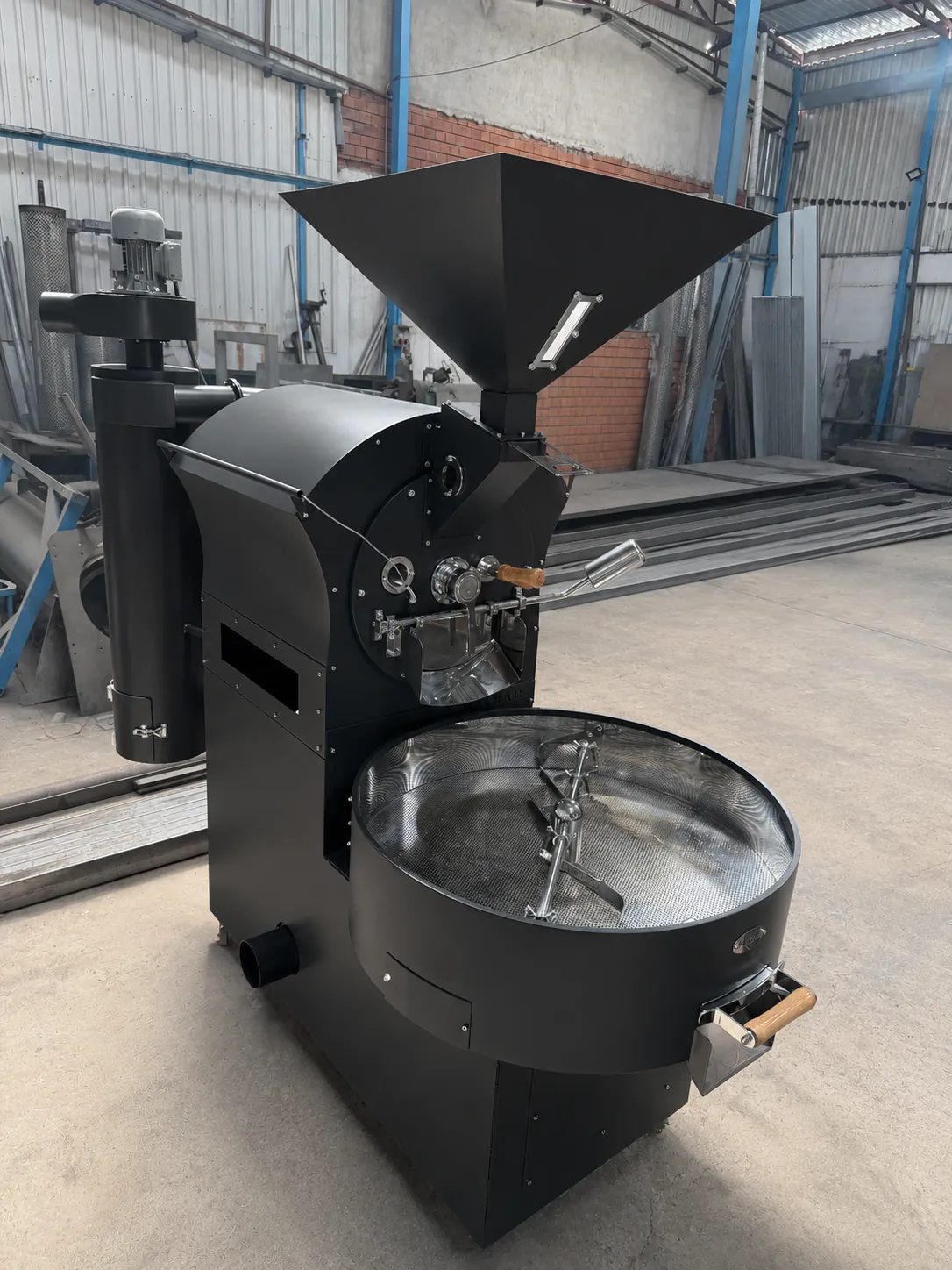
The figures come from the published specifications. Two machines need a gas supply sized for both burners at full fire, plus space for two control cabinets, two cooling trays and two exhaust connections. One larger machine needs a lower combined heat input for the same output, but it is a single, heavier unit with a larger footprint of its own.
What redundancy is worth
With two roasters, a failed sensor or a worn bearing on one machine slows the plant down. With one roaster, the same fault stops it. For a plant with daily delivery commitments to retailers or private label customers, that difference often decides the question on its own.
Two machines also make planned maintenance easier. One can be cleaned, inspected or have its chaff path cleared while the other keeps roasting. With a single roaster, maintenance time is lost production time, which is exactly why it gets postponed.
Redundancy only works if both machines can make the core products. If the second roaster is much smaller, it covers small orders well but cannot replace the main machine's output during a breakdown.
Product mix and small orders
A large drum does its work well near its working batch, typically 70 to 80 percent of the rated load, as the guide on choosing roaster capacity explains. Underload it and the roast behaves differently from the profile, which hurts consistency.
That matters for plants with many products. A plant whose orders are mostly full pallets of two or three blends fills a 120 kg (265 lb) drum easily. A plant that also roasts single origins in 20 kg (44 lb) lots, decaf, and private label runs for small brands will struggle to fill it. Two 60 kg (132 lb) machines, or one large roaster plus a smaller one, handle that mix better.
A smaller second machine also keeps decaf or flavored products off the main drum, if the plant wants to separate them. Some plants keep their original shop roaster for exactly this, and add an industrial roaster for volume.
Staff and the working day
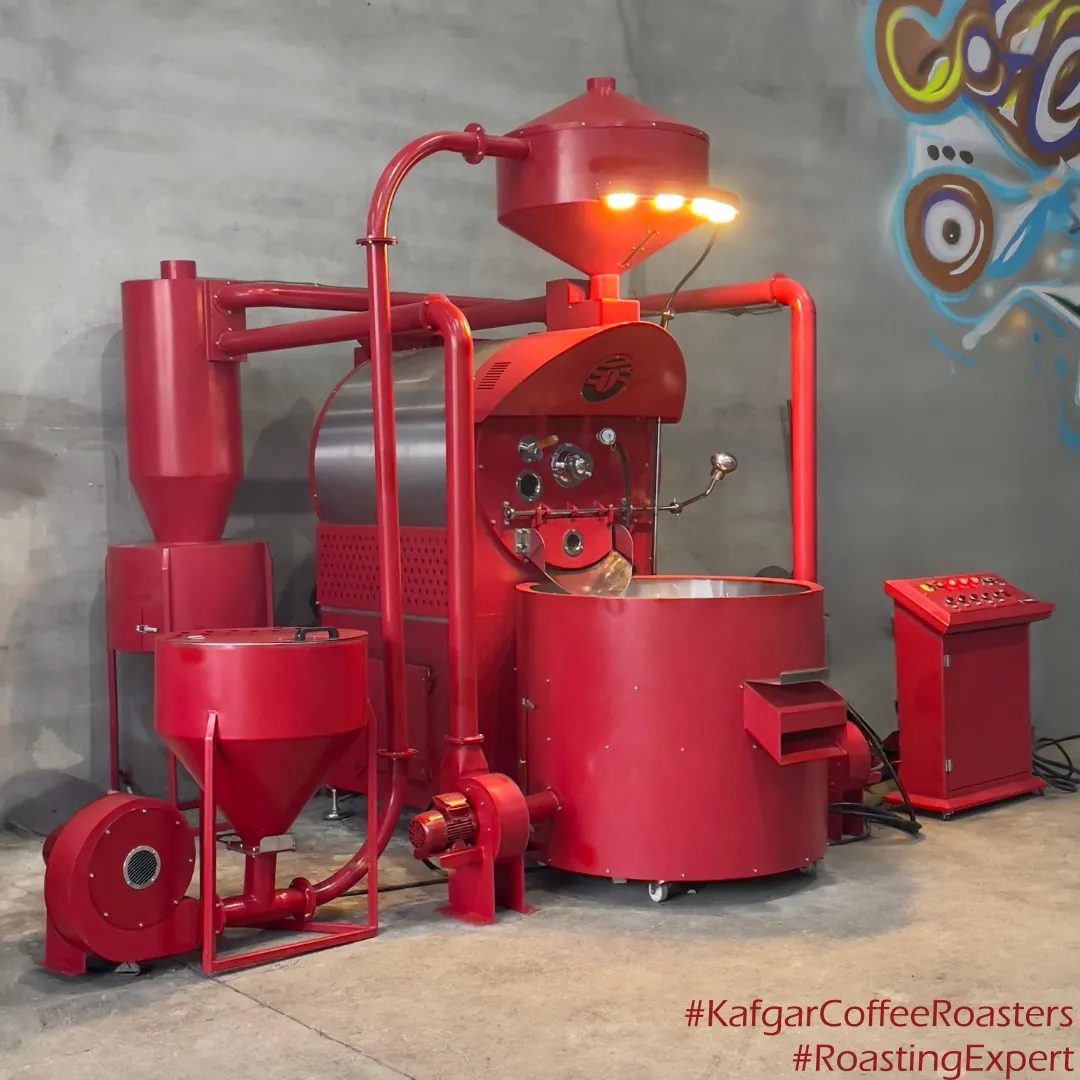
Two roasters running at the same time need attention at the same time: charges, first crack, drops and cooling all happen on two clocks. With PLC profiles and automatic green loading, one experienced operator can often supervise two machines once the profiles are stable, but that depends on the level of automation and on local safety practice. Plan for a second trained operator at least during the first months.
One large roaster halves the number of batches for the same output. Fewer charges and drops mean fewer chances for weighing errors and less handling between machines.
Floor space, utilities and exhaust
Check the room before the decision is made, not after. Points to measure:
- Floor area for each machine plus working space on all sides, and the path for green coffee in and roasted coffee out.
- Floor load. A KR-120 weighs 3,200 kg, concentrated on a smaller area than two KR-60 machines.
- Ceiling height for the machine, its hopper, the loader and the exhaust.
- Gas supply capacity for the combined heat power of every burner that may fire at once.
- Electrical supply for the combined power requirement. Standard supply is 380 V.
- Exhaust route. Each roaster needs its own exhaust path, and an afterburner must be sized for the total exhaust it treats.
Gas supply is often the limiting factor. Every Kafgar roaster from 15 kg up runs on LPG, LNG or natural gas, and any change to the gas line or tank should be designed and signed off by a licensed gas installer.
Sample roasting is a separate job
Some plants add a second production roaster partly to free the first one from sample work. That is an expensive way to roast samples. Green coffee evaluation, new lot approval and profile research run better on a dedicated sample roaster that uses grams, not kilograms. A sample roaster such as the Kafgar Sample Pro, with one to six drums of 80 to 120 g each, keeps that work off the production floor whichever route the plant chooses.
Three common situations
A plant at one roaster with steady, large orders of a few blends and a room built for growth usually does well with one larger drum. A drum twice the size doubles throughput, and the simpler setup suits the order book.
A plant with many products, small private label runs and daily delivery promises usually does well with a second roaster, often the same size as the first so that either machine can carry the core products.
A plant that is short of gas or floor height may not have a choice. The utility check decides, and the product plan adjusts to it.
Frequently asked questions
Can two different roaster sizes share one afterburner?
It is possible when the afterburner is sized for the combined exhaust of both machines and the ducting is designed for it. The exhaust layout should be planned with the equipment supplier and approved locally.
Is it better to sell the old roaster or keep it?
Keep it if it still covers small orders, decaf or development roasting. Sell it if the room or the gas supply is needed for the new machine.
Will a profile from the old roaster run on the new one?
Not directly, even on a similar model. Expect a series of logged trial roasts against color and cupping before a profile is released for production.
Should the second roaster be the same model as the first?
Often, yes. Matching machines share one parts shelf, and either can carry the core products. Profiles still need a few confirming trials on the second machine, but far fewer than on a different drum size. A different size makes sense when the second machine is meant for small lots or development work.
Planning the next roaster with Kafgar
Send us your current machine, weekly volume, product list and the room dimensions, and we can compare a second roaster with a larger one on your actual figures. The industrial roaster range covers 20 to 500 kg (44 to 1,102 lb) per batch, all with a 2-year free parts warranty.
Request a quote on WhatsApp or by email at [email protected].